
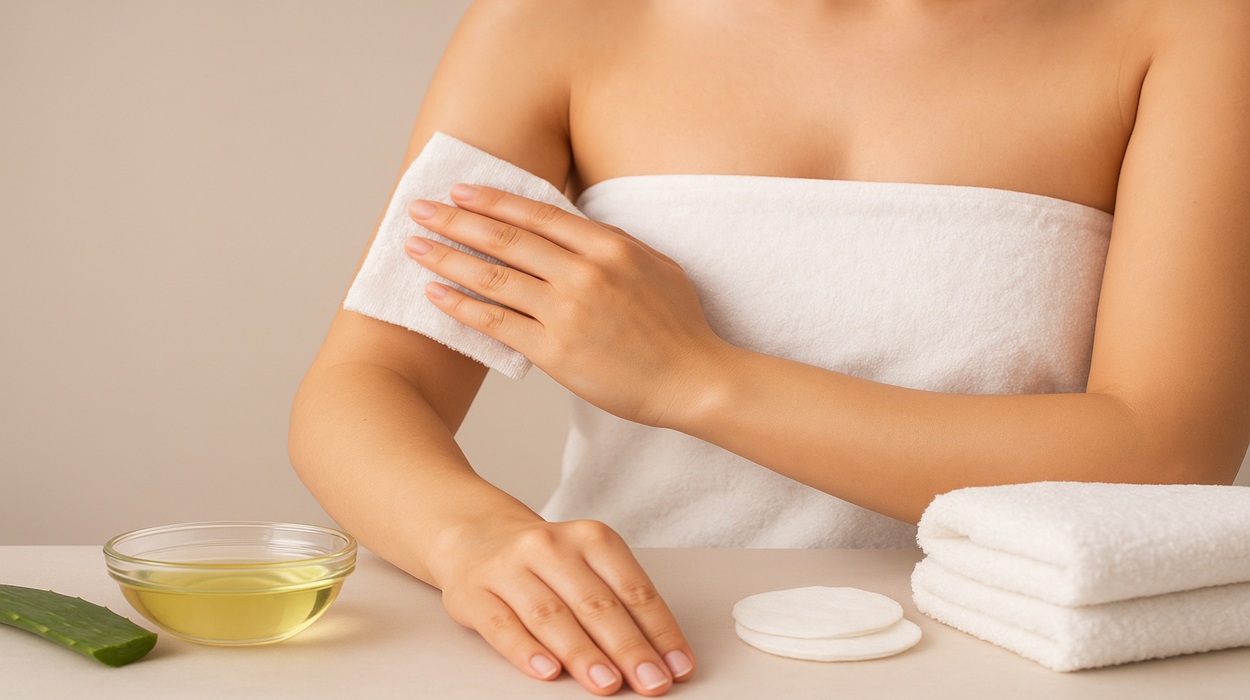
You’ve just finished a satisfying, smooth wax… and then you spot it: that little, stubbornly sticky patch of wax that refuses to budge. The tacky, gummy feeling is annoying, uncomfortable, and incredibly common after waxing. The good news? Removing wax residue from skin is simple when you use the right methods—and most solutions are gentle, effective, and already in your home.
In this guide, you’ll learn how to remove wax from skin, what removes wax from skin safely, and how to get wax off skin without irritation.
Why Wax Sticks to Skin (and Leaves That Sticky Film)
Wax tends to cling to the skin due to a few common mistakes—and each one leads to that frustrating sticky residue.
- Your skin was too dry before waxing
Dry skin gives wax nothing to grip but the skin itself, which makes it cling tightly and leave behind more residue. - The wax cooled down too quickly
If wax cools faster than expected, it won’t harden correctly, causing it to stick instead of lifting cleanly. - A thick layer of wax was applied
Thicker layers break unevenly and leave behind a messy film.
Quick-Reference Table: Best Methods to Remove Wax from Skin
| Method | Best For | Why It Works |
|---|---|---|
| Oil Method | All wax types | Oil dissolves oil-based wax quickly. |
| Warm Water + Soap | Sugar wax | Sugar dissolves in warm water. |
| Petroleum Jelly | Sensitive areas | Hydrating and gentle for delicate skin. |
Most Effective Ways to Remove Wax from Skin
Here are the safest and most reliable methods to remove leftover wax quickly and gently.
1. Warm Oil (Most Effective and Safest Method)
Best for: All wax types
Oil works well because wax dissolves naturally in oil.
How to do it:
- Warm coconut, olive, baby, or almond oil.
- Massage gently over the residue.
- Let it sit for 20–30 seconds.
- Wipe with a soft cloth.
- Rinse and moisturize.
2. Warm Water + Mild Soap (For Sugar Wax Only)
Best for: Sugar-based wax
Sugar wax is water-soluble, so warm water melts it instantly.
How to do it:
- Soak a washcloth in warm water.
- Press onto the area for 20–30 seconds.
- Wipe gently with mild soap.
3. Petroleum Jelly (Gentle for Sensitive Areas)
Best for: Face, bikini line, underarms
Petroleum jelly loosens wax while moisturizing skin.
How to do it:
- Apply a thick layer.
- Leave on for 5–10 minutes.
- Wipe with a cotton pad.
- Rinse.
4. Salon-Style Wipes Alternative (Alcohol / Witch Hazel)
Best for: Small stubborn patches
Avoid if: Skin is sensitive, dry, or irritated
These work similarly to professional solvent wipes but should be used sparingly.
How to do it:
- Apply alcohol or witch hazel to a cotton pad.
- Swipe gently.
- Rinse and moisturize afterward.
5. Warm Compress to Soften Wax
A gentle method to soften stubborn wax so it wipes away easily.
How to do it:
- Place a warm towel on the area for 30–60 seconds.
- Wipe softened wax.
- Apply aloe or moisturizer.
6. For Hard Wax Chunks Only: The Ice Method
Best for: Hard wax that has dried into thick pieces
Not for: Sticky residue
Ice makes hard wax brittle so it snaps off easily.
How to do it:
- Wrap ice cubes in a cloth.
- Apply for 10–20 seconds.
- Lift wax gently.
- Apply soothing moisturizer.
Safe Home Remedies That Work
1. Aloe Vera Gel
Aloe vera softens skin and reduces irritation.
How to use it:
- Apply aloe gel.
- Let it sit for a minute.
- Wipe with a cloth.
2. Sugar + Warm Water (For Sugar Wax Only)
This dissolves leftover sugar wax effectively.
How to do it:
- Mix sugar with warm water.
- Massage onto the area.
- Rinse.
The Essential Final Step: Restore Your Skin Barrier
After waxing, skin is more delicate and needs hydration to prevent irritation or ingrown hairs.
Use moisturizers that are:
- Fragrance-free
- Non-comedogenic
- Lightweight
- Suitable for sensitive skin
Look for ingredients such as aloe vera, ceramides, hyaluronic acid, and panthenol.
When to Avoid Certain Methods
Avoid using these after waxing:
- Lemon juice (can burn the skin)
- Baking soda (abrasive and irritating)
- Hot water (increases irritation)
- Scrubbing (damages freshly waxed skin)
When to Seek Professional Help
Get professional help if you notice:
- Severe redness after 24 hours
- Swelling
- Pus-filled bumps
- Signs of infection
- Burning or blistering
Conclusion
Removing wax residue from skin doesn’t have to be difficult. With the right techniques—whether using oil, warm water, or petroleum jelly—you can safely and effectively remove sticky wax and keep your skin smooth and irritation-free. Now you know how to remove wax from skin, what removes wax from skin best, and how to get wax off skin safely after every waxing session. For more insight visit: thefashionfest.