


Introduction
Fashion trends may come and go, but some styles leave a lasting legacy. One such timeless garment is the chiton dress, a key piece of ancient Greek clothing that continues to inspire modern fashion.
At first glance, the chiton may seem like a simple draped fabric. However, it represents much more than that. It reflects culture, social identity, and even artistic expression from thousands of years ago. Today, designers across the United States still draw inspiration from its flowing silhouette and minimalist elegance.
So, why does the chiton dress still matter? Because it proves that simplicity, comfort, and beauty never go out of style.
What Is a Chiton Dress?
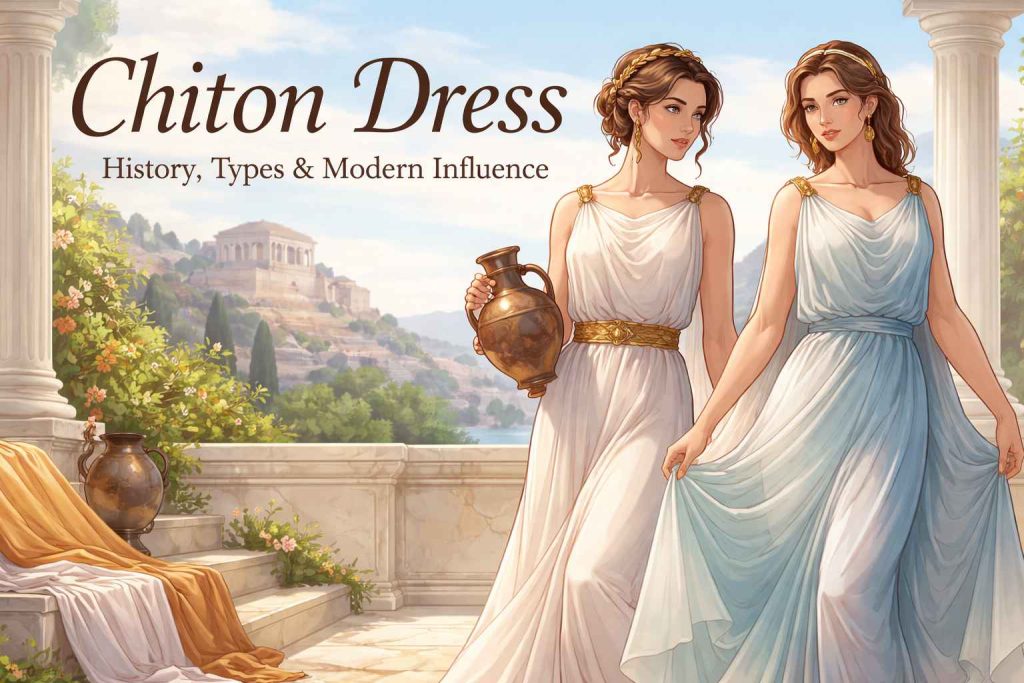
A chiton dress is a simple garment from ancient Greece made by draping a rectangular piece of fabric around the body and securing it with pins or belts. It was worn by both men and women and is known for its loose fit, comfort, and elegant appearance.
History of the Chiton Dress
The history of chiton dress dates back to ancient Greece, around 750–30 BCE. It was one of the most commonly worn garments during this period.
Initially, chitons replaced earlier clothing styles like the peplos. Over time, they became popular due to their versatility and ease of wear. Unlike stitched garments, chitons were often made from a single piece of fabric, making them both practical and adaptable.
Moreover, chitons were worn by people of all social classes. However, the quality of fabric and decoration often indicated wealth and status. For example:
- Wealthy individuals wore fine linen or silk chitons
- Common people used wool or coarse fabric
- Decorative borders showed higher social standing
Interestingly, chitons also varied based on region and time period. As Greek culture evolved, so did the design and styling of this iconic garment.
Types of Chiton
When discussing types of chiton, two main styles stand out: Doric and Ionic.
1. Doric Chiton
The Doric chiton is the older and simpler version.
Key features:
- Made from wool
- Sleeveless design
- Secured with pins at the shoulders
- Belted at the waist
Because of its simplicity, it was commonly worn in earlier periods and in rural areas.
2. Ionic Chiton
The Ionic chiton came later and was more refined.
Key features:
- Made from linen
- Lightweight and breathable
- Had sleeves created by multiple pins along the arms
- More decorative and elegant
This version became especially popular in urban settings and among wealthier individuals.
Materials and Design
The design of a chiton garment was both practical and stylish.
Common Materials:
- Wool (for warmth and durability)
- Linen (for comfort in warmer climates)
- Silk (for luxury and status)
Design Elements:
- Rectangular fabric shape
- Minimal stitching
- Use of pins (fibulae)
- Belts or girdles for shaping
Additionally, colors and patterns played an important role. While plain white was common, dyed fabrics and embroidered borders were also used, especially by the upper class.
How Chiton Was Worn (Step-by-Step)
Understanding how to wear chiton helps bring this ancient garment to life.
Step-by-Step Process:
- Start with a rectangular cloth
Wrap it around your body horizontally. - Secure the shoulders
Use pins or brooches to fasten the fabric at the shoulders. - Adjust the length
Let the fabric fall naturally to knee or ankle length. - Add a belt
Tie a belt around the waist to create shape and structure. - Style the folds
Adjust the draping for comfort and elegance.
This simple method made the chiton both functional and versatile—qualities still appreciated in modern clothing.
Chiton vs Toga
Many people confuse the chiton with the Roman toga. However, they are quite different.
| Feature | Chiton Dress | Toga |
|---|---|---|
| Origin | Ancient Greece | Ancient Rome |
| Structure | Simple rectangular draped fabric | Large semicircular cloth |
| Gender | Worn by men and women | Primarily worn by men |
| Comfort | Lightweight and practical | Heavy and complex |
| Fastening | Pins and belts | Draped without pins |
| Purpose | Everyday wear | Formal or ceremonial occasions |
In short, the chiton vs toga comparison highlights simplicity versus formality.
Cultural and Historical Significance
The chiton was more than just clothing—it was a symbol of identity in Greek fashion history.
Why It Mattered:
- Represented social class
- Indicated gender roles
- Showed regional differences
- Played a role in religious ceremonies
Additionally, chitons often appeared in ancient art, sculptures, and pottery. Today, institutions like the Metropolitan Museum of Art and the British Museum preserve artifacts and artworks that showcase these garments.
Modern Influence of Chiton Dress in Fashion
Although centuries have passed, the chiton dress still influences modern fashion—especially in the United States.
Where You See It Today:
- Red carpet gowns with draped silhouettes
- Summer maxi dresses
- Resort wear and beach fashion
- Minimalist and sustainable fashion trends
Designers often recreate the chiton’s flowing style using modern fabrics like chiffon and jersey. As a result, it remains a popular choice for those who value comfort and elegance.
Benefits of Chiton Garment
The chiton’s design offers several advantages, which explains its long-lasting appeal.
Key Benefits:
- Comfortable Fit – Loose design allows easy movement
- Breathable Fabric – Ideal for warm climates like many parts of the U.S.
- Versatile Style – Suitable for casual and formal wear
- Timeless Design – Never goes out of fashion
- Easy to Wear – Requires minimal tailoring
Because of these benefits, many modern garments still follow similar design principles.
Conclusion
The chiton dress is a perfect example of how ancient fashion continues to shape modern style. From its origins in ancient Greece to its influence on today’s clothing trends, it remains a symbol of simplicity, elegance, and practicality.
To sum up:
- It is one of the most important pieces of ancient Greek clothing
- It comes in two main styles: Doric and Ionic
- It influenced modern fashion across the United States
- Its design is still relevant today
Ultimately, the chiton dress proves that great design stands the test of time.
FAQs
1. What is a chiton dress used for?
A chiton dress was used as everyday clothing in ancient Greece. It was worn by both men and women for comfort, practicality, and style.
2. What is the difference between a chiton and a toga?
A chiton is a Greek garment made from rectangular fabric, while a toga is a Roman garment that is larger, heavier, and mainly worn for formal occasions.
3. What materials were used to make a chiton?
Chitons were made from wool, linen, or silk, depending on the wearer’s social status and the climate.
4. Is the chiton dress still worn today?
Not in its original form, but modern dresses—especially draped gowns and maxi dresses—are inspired by the chiton design.
5. How do you wear a chiton dress?
You wrap a rectangular cloth around the body, secure it at the shoulders with pins, and tie it with a belt at the waist for shape.